
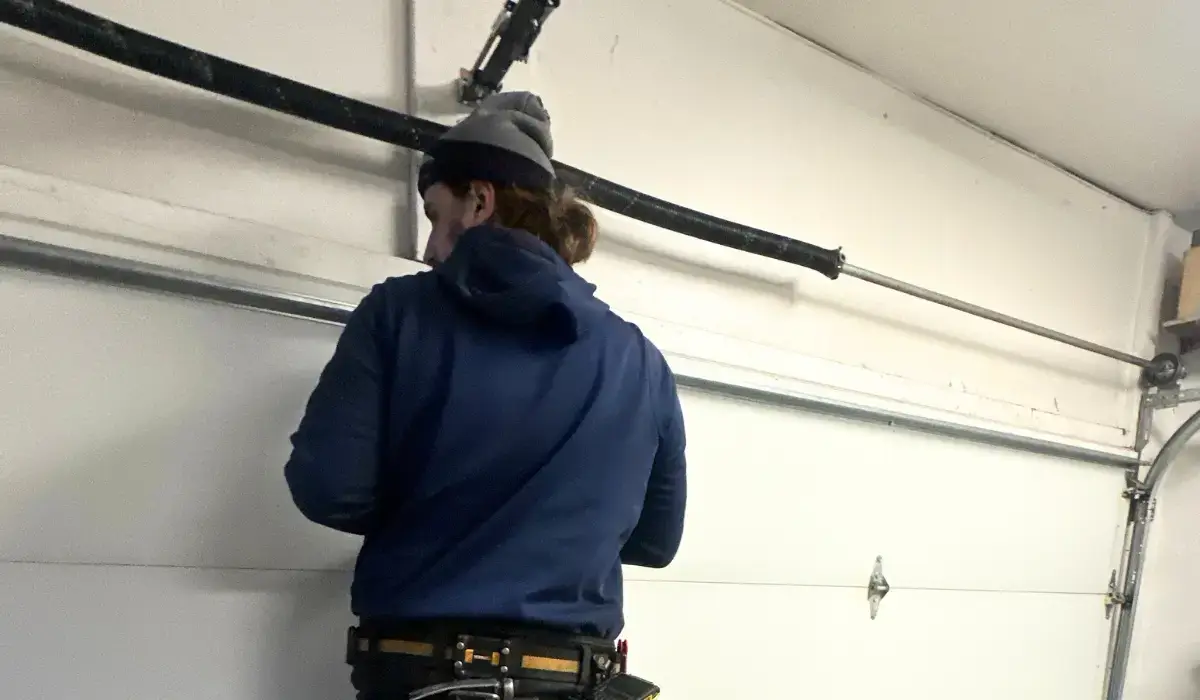
A sagging garage door is more than an eyesore — it's a warning sign that something structural is failing. Ignoring it leads to progressively worse problems, higher repair costs, and potential safety hazards.
What Causes a Garage Door to Sag?
Worn springs: As springs age, they lose tension and can no longer support the door's full weight evenly. Damaged cables: Frayed or stretched cables cause uneven lifting. Broken hinges: Metal fatigue in hinges allows sections to flex. Panel damage: Dented or cracked panels compromise structural rigidity. Track misalignment: Bent or shifted tracks force the door into an uneven position.
The Risks of Ignoring It
A sagging door puts extra stress on the opener motor, accelerating its wear. The uneven weight distribution can cause cables to snap or tracks to bend further. Security is compromised as gaps form between door sections or at the bottom seal. Energy efficiency drops as insulation breaks seal.
Professional Solutions
The fix depends on the root cause. Spring replacement restores proper tension. Cable replacement ensures even lifting. Strut installation adds structural reinforcement to prevent future sagging. In some cases, panel or full door replacement is the most cost-effective solution. A professional diagnostic identifies the exact cause and the right repair.